App design for Gen Z eco-anxious people
The brief
Part of the UX/UI bootcamp I was enrolled in, we were asked to work on creating a mHealth app focused on a user niche.
We were a team of two and we decided to look at the niche of people who are concerned about climate change (eco-anxious people). It was a topic that resonated with us, being environmentally sensitive, and we felt it was relevant to this application and would make it stand out.
The secondary research
To check if this niche was really relevant, we conducted the secondary research to get solid data about eco-anxiety and found out this phenomenon was particularly affecting young people and was growing over the time.
One study in particular caught our attention. It was carried out in 2021 with 10,000 young people aged between 16 and 25. Here are the main study results :
The user research
To corroborate our findings, we carried out a quantitative survey of 18-25 year old people with a high level of environmental awareness. The results revealed some interesting insights:
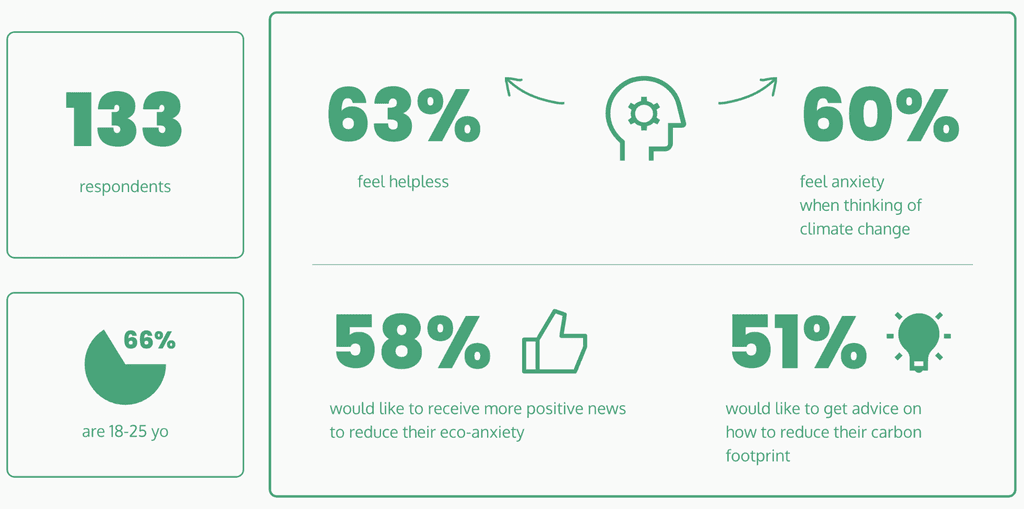
Complementary to this survey, we conducted 5 user interviews from which we learned the following elements:
These interviews really influenced us in defining the brand identity. In all the interviews, what came up everytime is this sense of fatality linked to the eco-anxiety. It’s here, they live with it.
The user persona and user journey map
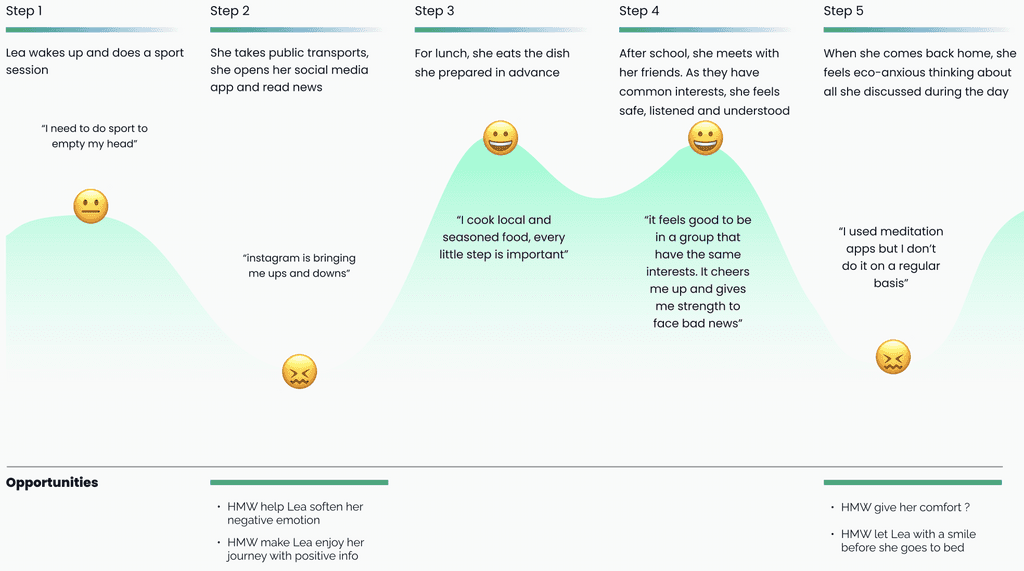
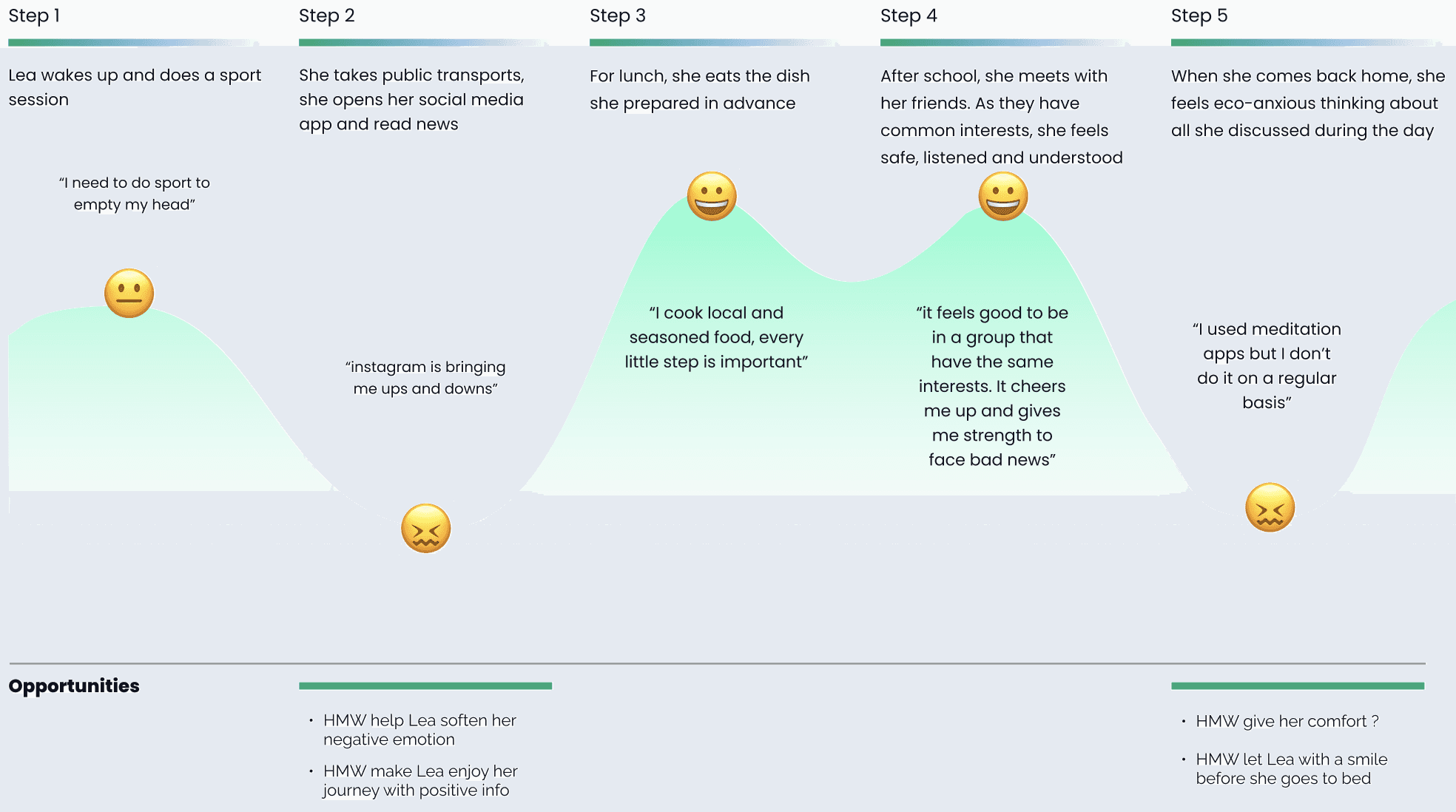
Bringing altogether the insights from our secondary and user research, we defined the following user persona:
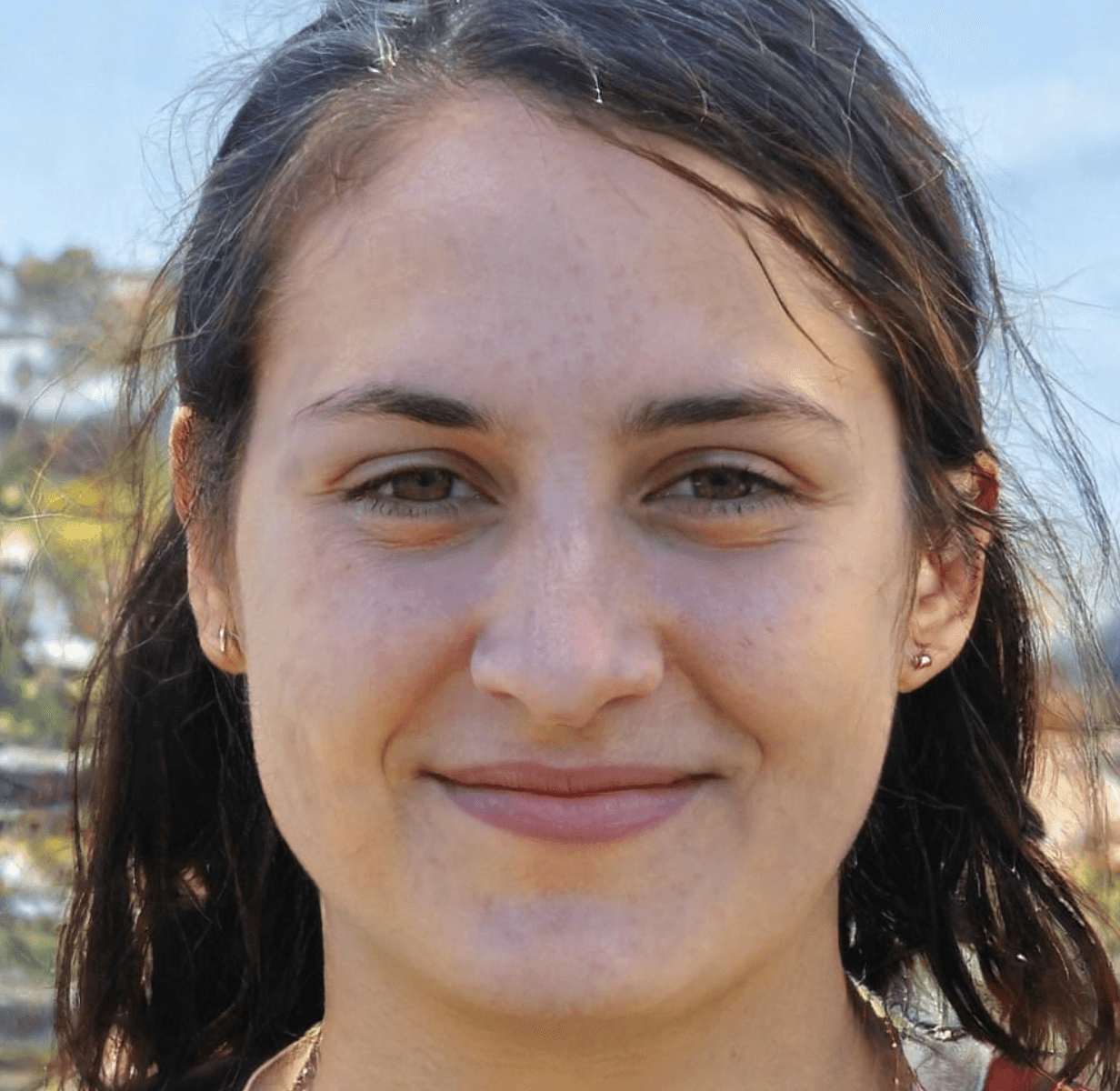
Lea lives in Paris, she is in her 20s and studies social sciences. She is a volunteer in an socially-oriented organization. She feels mentally affected by environmental issues that occur more and more. Her eco-anxiety is growing, she sometimes feels overwhelmed. However, it’s also a source of energy that pushes her to act and orientate her lifestyle to be more aligned with her deep values.
The problem statement
Young people with eco-anxiety
need to take a step back, learn to live with it, and adapt their adult life choices,
because they are not able to control the climate change going on.
The ideation process
We started to ideate on the features the app would have for the MVP, we used the Crazy 8s idea and also the Worst idea methodologies. We came up with the following must-have features for the app:
News content
Relaxation exercises
Environmental-oriented goals
Journaling
Mood tracker
Tips to progress on the goal
Dark mode default mode
☝
The wireframing phase
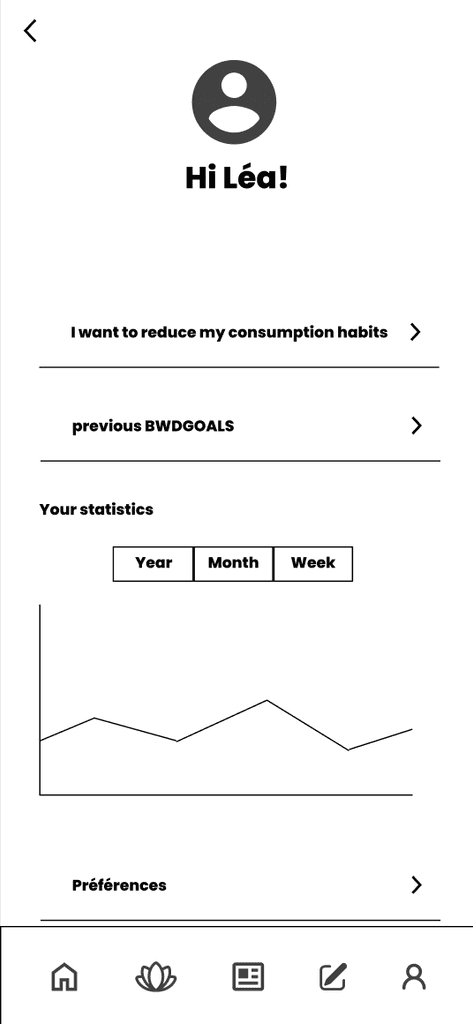
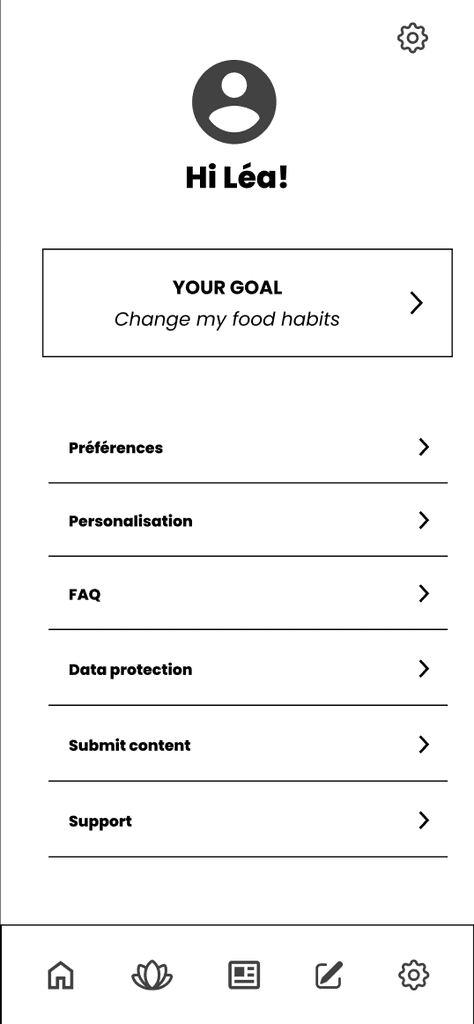
We designed the low-fidelity wireframes below and tested them with 5 users. We got feedback on the home page and profile pages’ content organisation. In particular, users told us they didn’t want to see the statistics straight away on the home page because they felt it was too overwhelming. Therefore, we iterated on those elements in priority for the mid-fidelity wireframes.
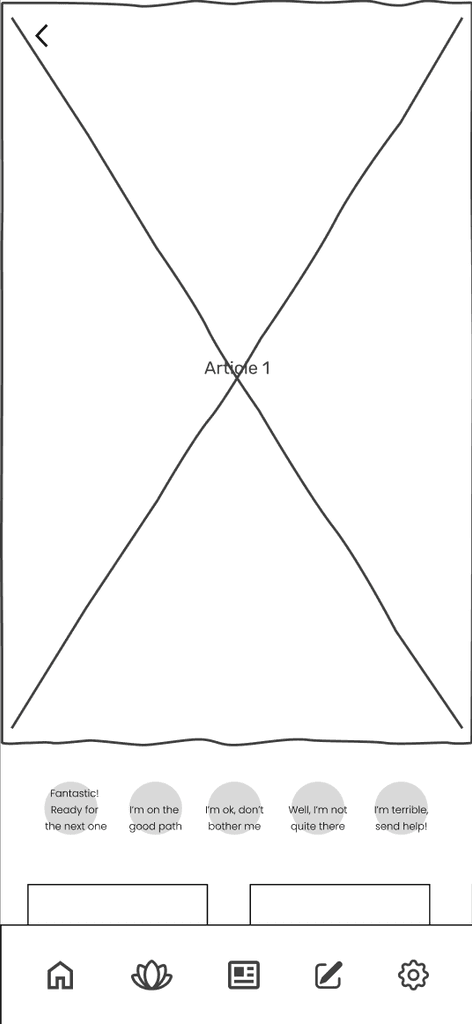
In to the mid-fidelity wireframes, we decided to introduce the mood tracking in the first screens to create a funnel and make it easier for the user to save it. Then we decided on a different content organisation for the home page and the goal progress tracking. We got rid of the statistics directly visible from the home page to answer the negative feedback from the low-fi.
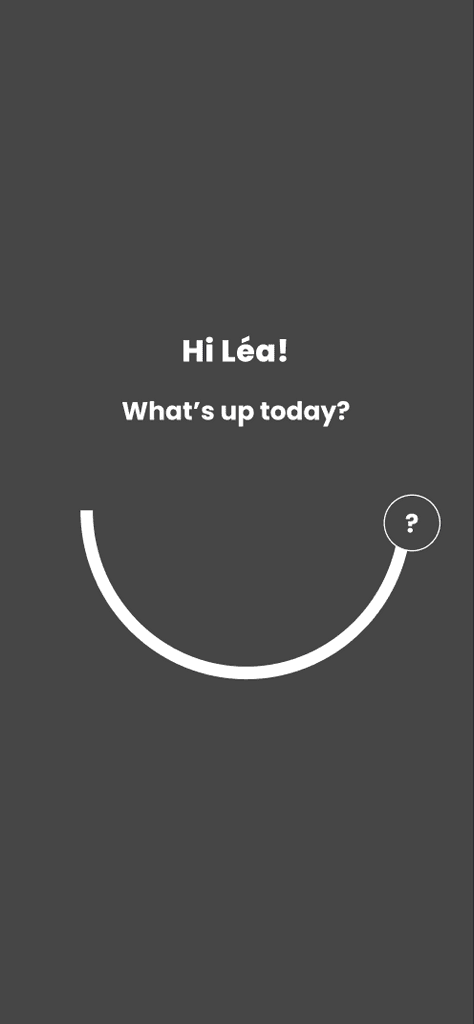
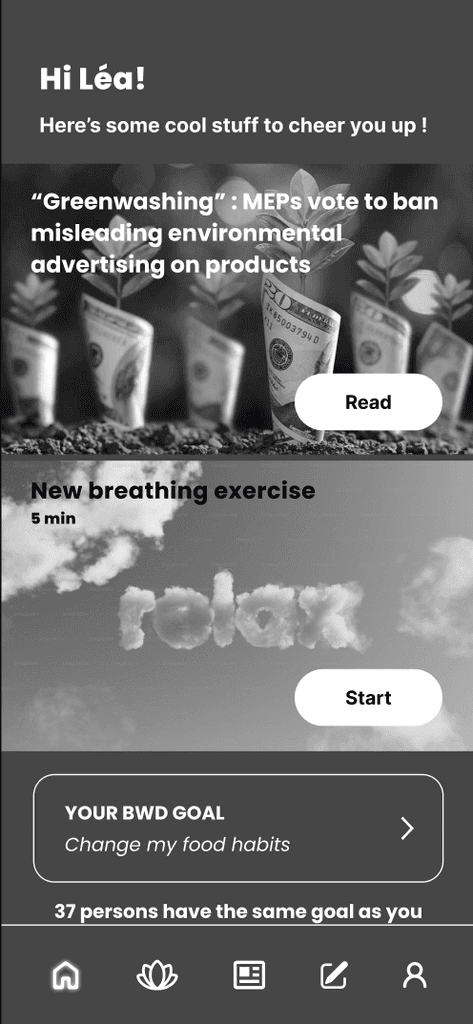
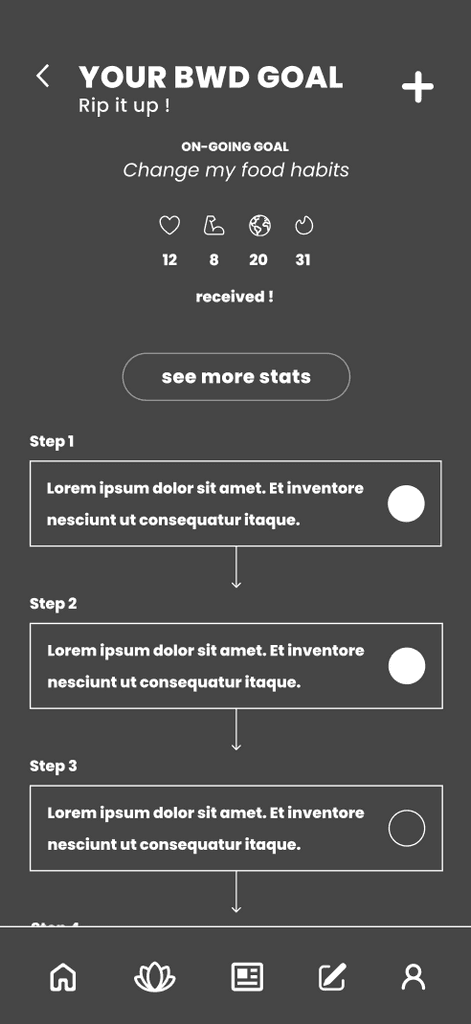
User testing revealed that the mood tracker was not intuitive enough, the home page was too busy and the destination page was not well structured. We decided to incorporate this feedback into the high-fidelity wireframes.
The branding
To define the branding, we first did a competitive analysis and selected mobile apps our target tend to use on a daily basis.
We picked a media app (Brut) and two meditation apps (Calm & Petit Bambou). We identified interesting trends on the fonts, the colors used, the content and the structure that definitely inspired us.
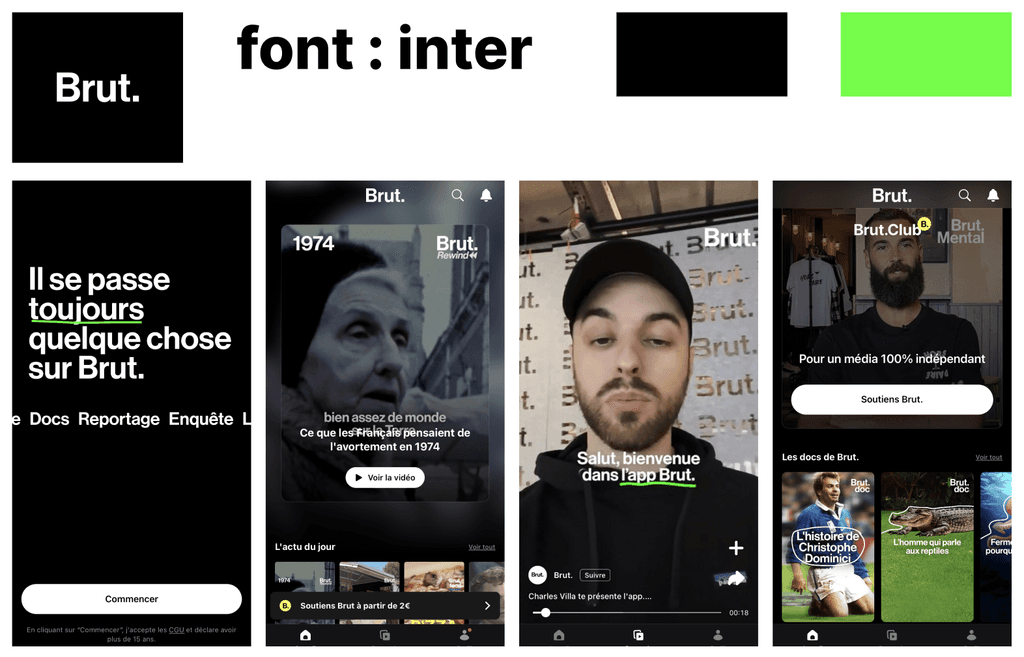
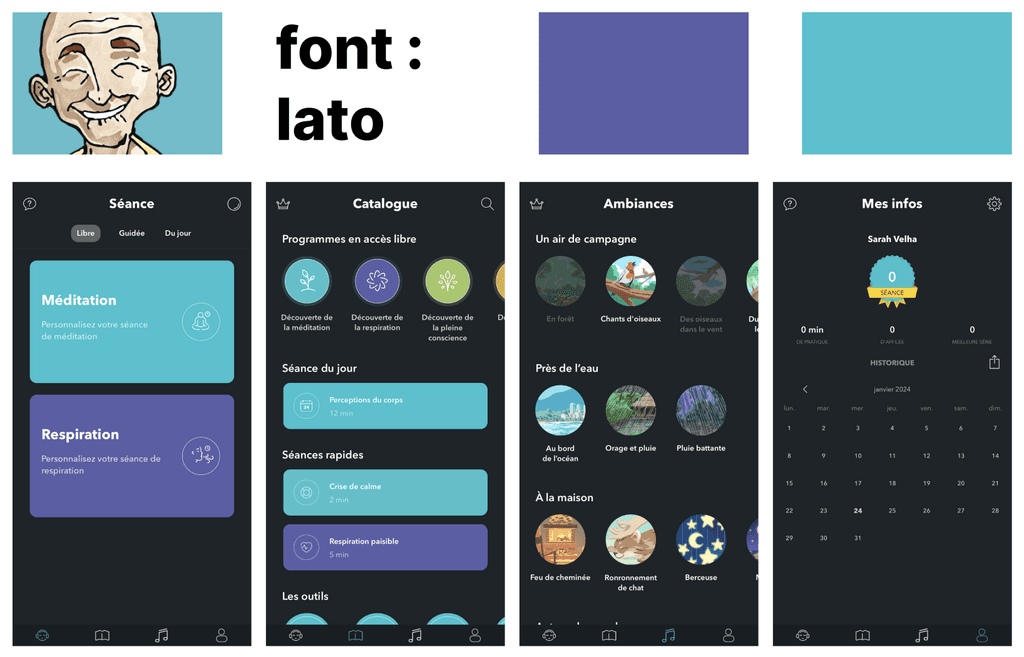
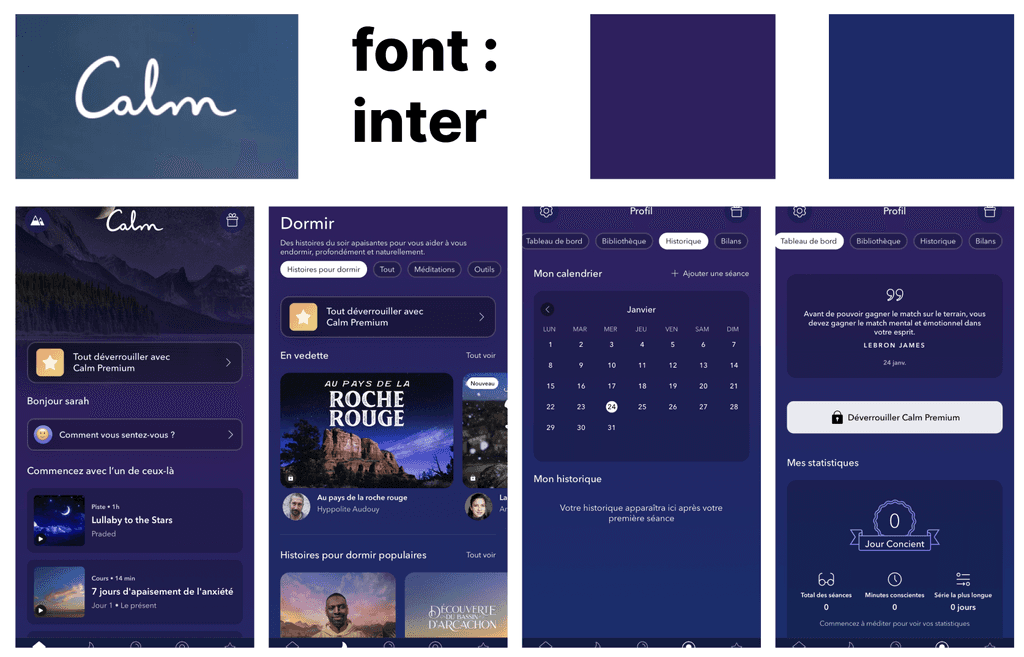
We also defined the brand attributes we wanted to convey with our app : a sense of calm, mindfulness and also a direct tone.
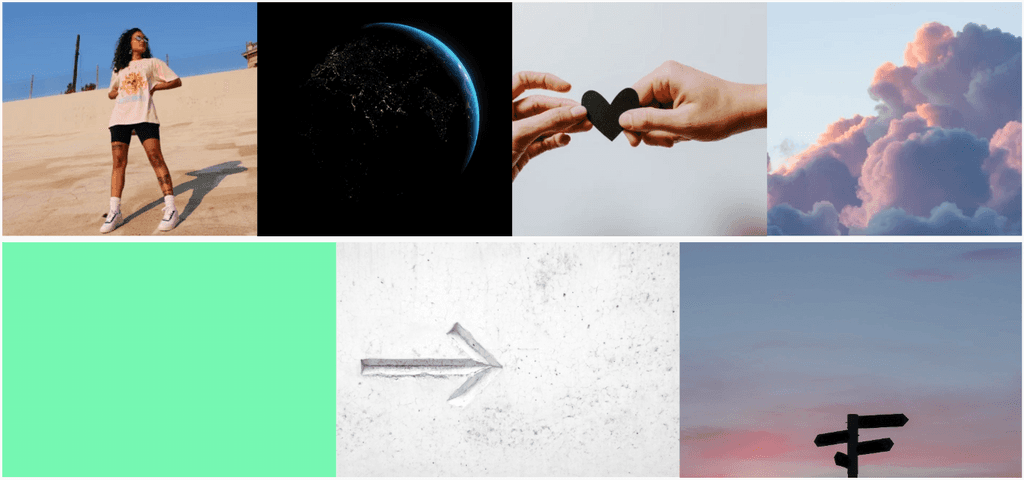
We made a first version and tested it with a few users. We noticed that one image was too friendship-oriented so we decided to remove it and replace it with an image that conveyed more of a sense of solidarity. We started testing the new version with one user and it was more in line with our brand attributes.
To name the app, we brainstormed from the results of the user survey and interviews. One thing that struck us was the theme of death, which kept coming up in the answers and discussions. One of the users even told us “we are all going to die!”. We tested "Beyond", "Beyond us" and "Before we die" with several people who were part of our target group and the majority of them chose "Before we die". As the app was aimed at young people, we decided to take an unusual approach. Despite its dramatic sense, we felt that this name would also encourage users to take action and live their lives, which is what we wanted to convey with our app.
So we named the app that way, knowing it could be quite strong and divisive, and then simplified it to "BWD" to make it easier to use within the app.
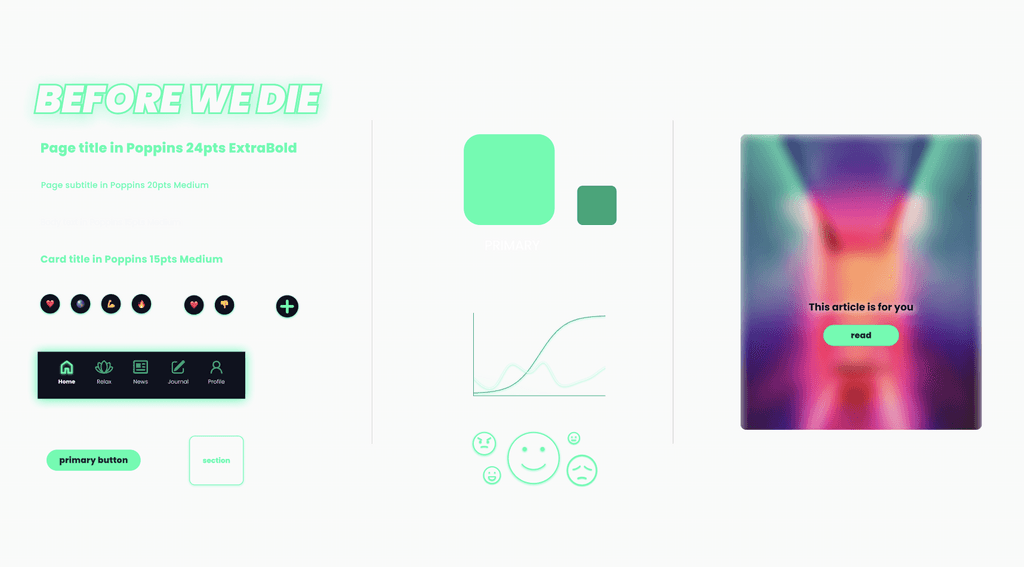
We then looked at the colour palette we wanted for our app. We were inspired by the competitive analysis where we saw a clear trend towards the use of dark backgrounds. We also noticed the use of neon colours on websites or apps used by our target audience, so we decided to follow the dark background trend and choose a nice green neon colour for the secondary colour.
For the typography, we naturally chose a bold font as we saw it was widely used and we also wanted to convey boldness through our app. Here's the style tile we created:
The result
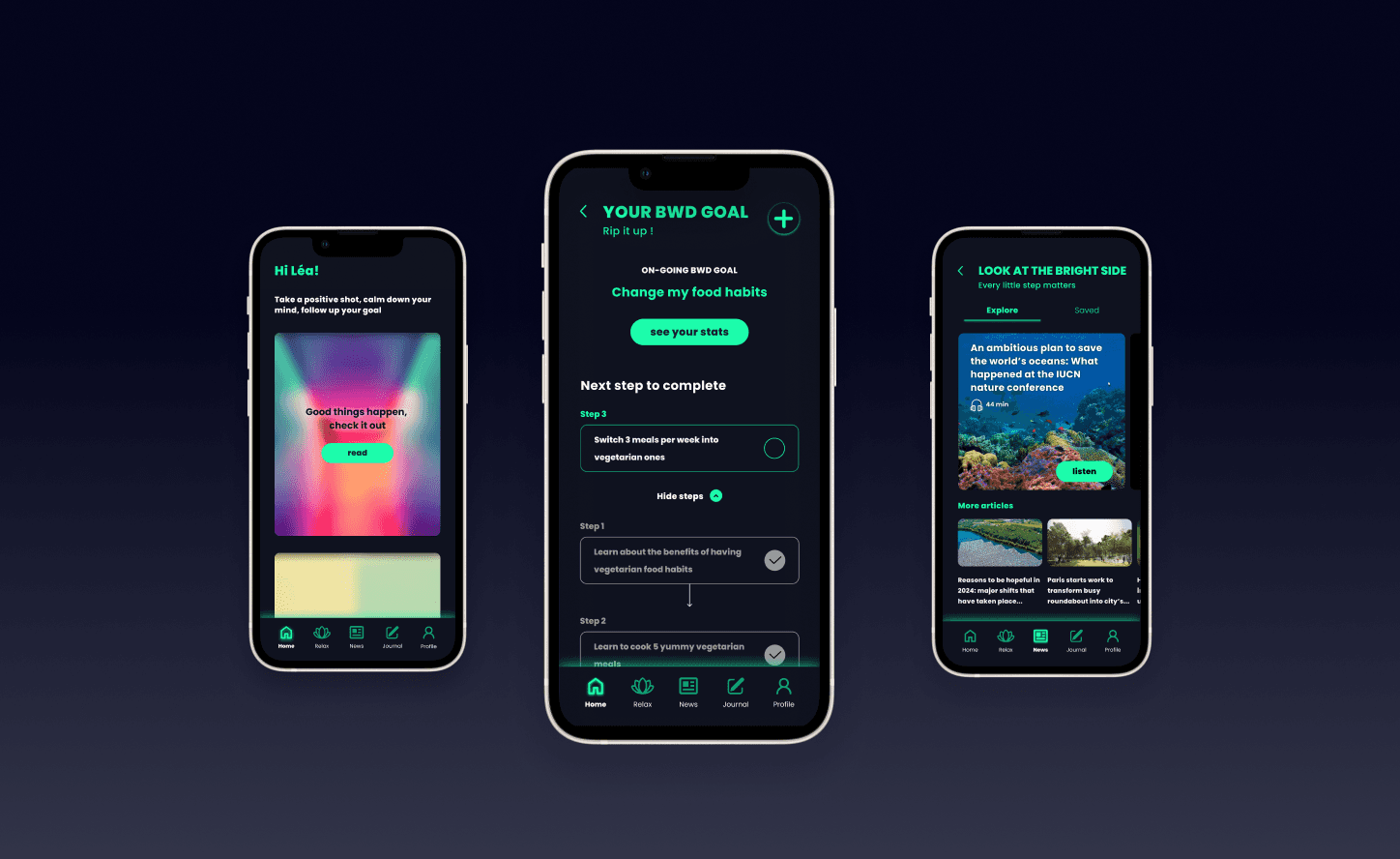
Here's the flow of the app, showing the mood selection, the home page navigation, the good news page, the relaxation exercises page and the goal page with statistics:

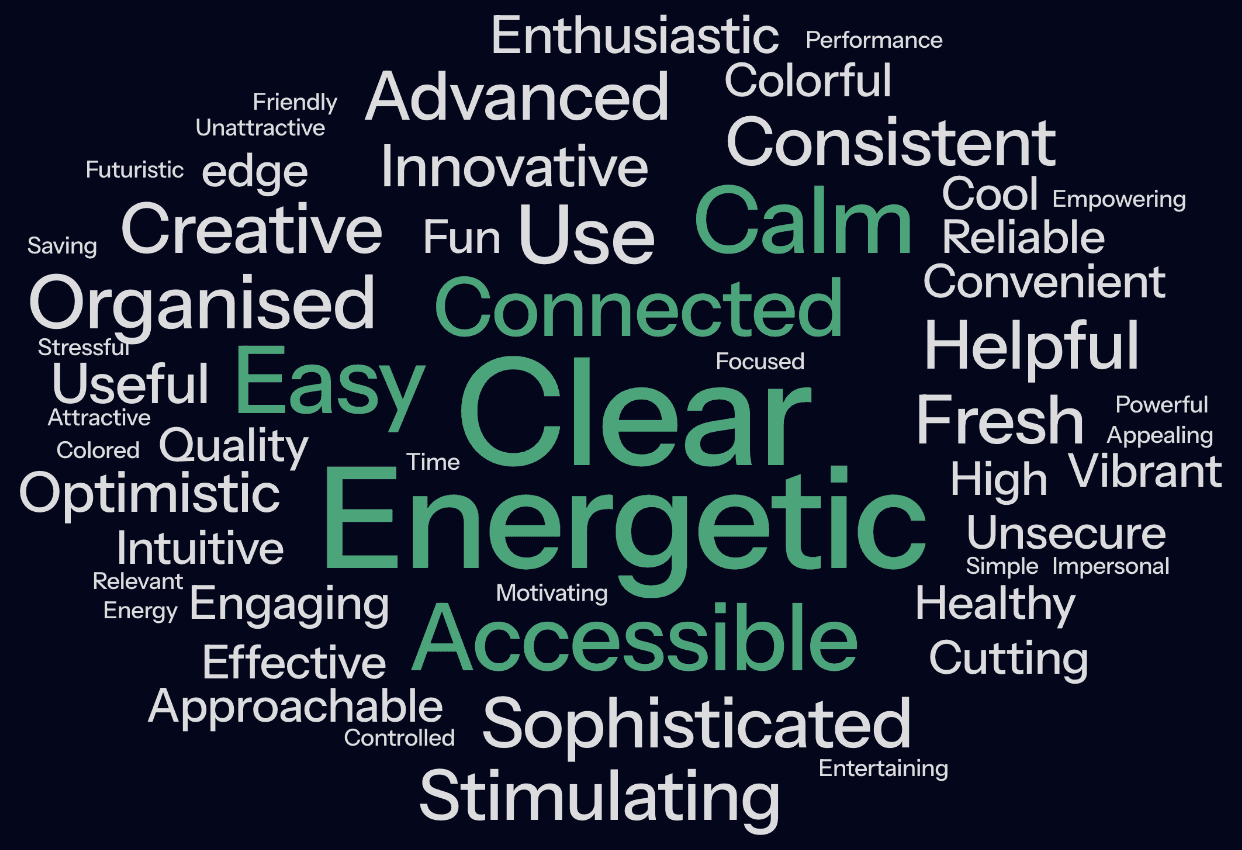
We did a desirability test based on three key screens of our app to understand what feeling our app conveyed and here are the highlighted words. We think it's pretty close to what we want users to feel, so we were pretty happy with it.
The next steps
Regarding the future evolutions we would include into this app, we thought about the following ones :
Allow several goals to be followed up
Enlarge the community to emphasize collective support
Give the possibility to support an environmental organisation (through a sponsoring for instance)
Let's get in touch
Made with ❤️ and 💦
Mathilde Sampré© 2025 . All rights reserved.
I'm proud this website has an eco index of 82/100